Retail & distribution
Explore published models and a coordinated assortment for your market.
Browse Furniture ↗Foshan, China · About YMH
Meet YMH.
Furniture from Foshan.
Explore the YMH Foshan furniture factory and showroom, from upholstered production established in 2019 to the walnut line launched in 2022.
Discover the people behind the furniture
01 / Our story
YMH is based in Longjiang, Foshan, one of China’s furniture-making centres. Our work focuses on two collections: Italian-style light luxury and walnut furniture for retail assortments and interior projects.
The showroom and workshop photographs on this site offer a closer view of the furniture, material choices and making behind the collection.
“Inspired by design.
Made through experience.”

Our journey / From manufacturing to YMH
From upholstered furniture to walnut solid wood, and from product development to an international-facing brand.
The Italian-style minimalist and light-luxury upholstered furniture production line was established in 2019.
The Daimu collection was introduced, marking the formal launch of a production line focused on North American walnut solid-wood furniture.
With a focus on product development, the two collections cover living, dining, bedroom, storage and study furniture.
The YMH website launches for overseas buyers, presenting the furniture collections and a view inside the manufacturing operation.
02 / Our manufacturing foundation
YMH brings its international-facing brand together with direct furniture manufacturing in Longjiang, Foshan. Our manufacturing operation works with Saiyue; the figures below describe this production and showroom operation, with the area covering both uses.

03 / How the furniture is made
Wood and upholstered furniture follow different production routes. These nine topics explain the relevant operations and checks; the route and sequence depend on the selected model.
Joinery
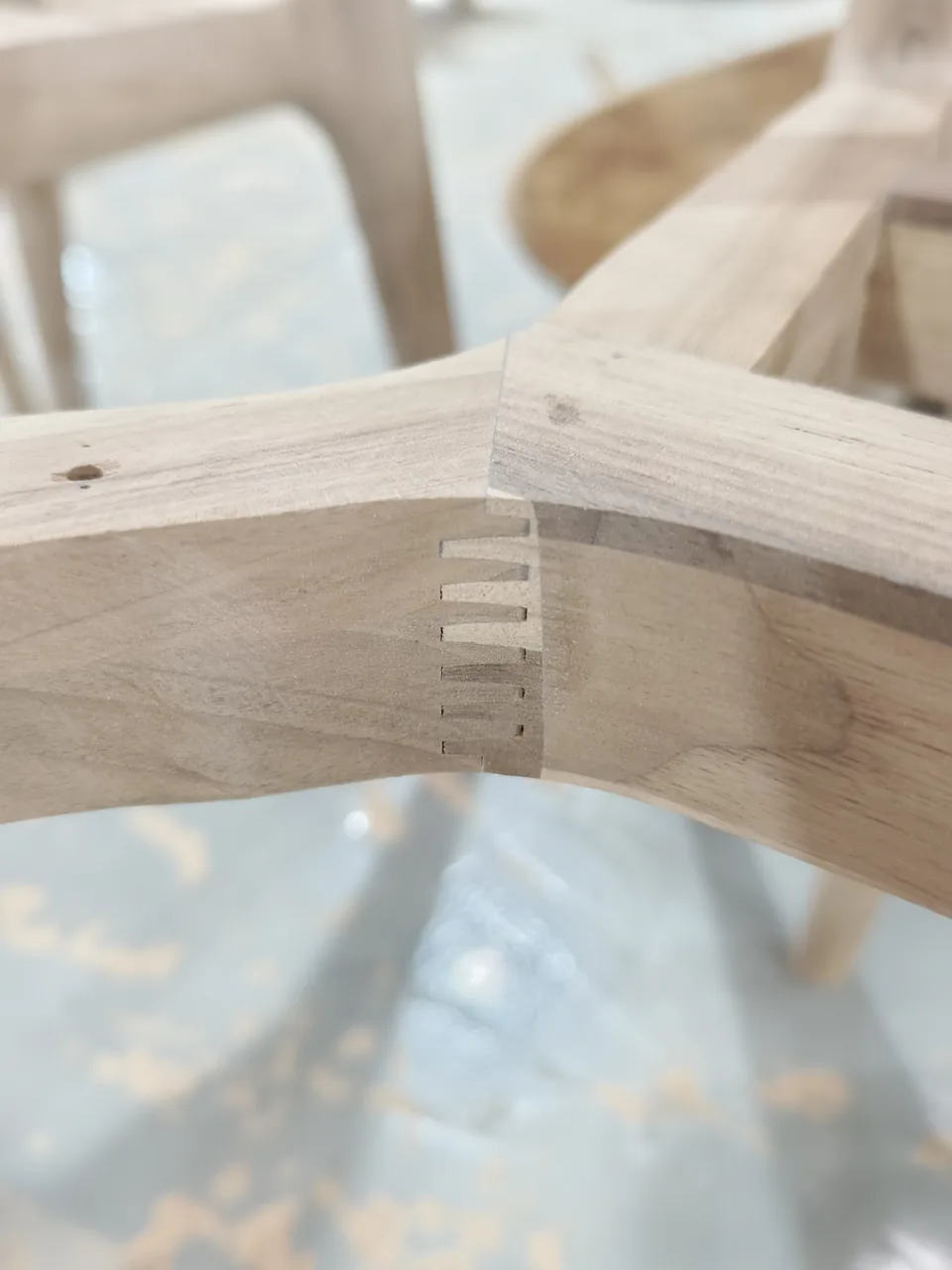
A slender chair leg or curved wooden arm leaves little room to hide a poorly fitted connection. Mortise-and-tenon and other interlocking wood joints bring components together through their shape; the fit, bonding surfaces and surrounding timber all contribute to the connection.
The joint should close neatly without forcing the adjoining parts out of alignment. At an exposed corner, the transition should feel continuous to the hand, with a clean shoulder and no distracting step between components. Preparing and fitting the joint before finishing helps retain the intended proportions.
Construction follows the selected model: solid-wood joints, panel connections and upholstered frames need different solutions. The product specification identifies the solid-wood and panel components, their connection methods and any reinforcement, giving your team a clear picture of how the piece is built.
Painting & finishing
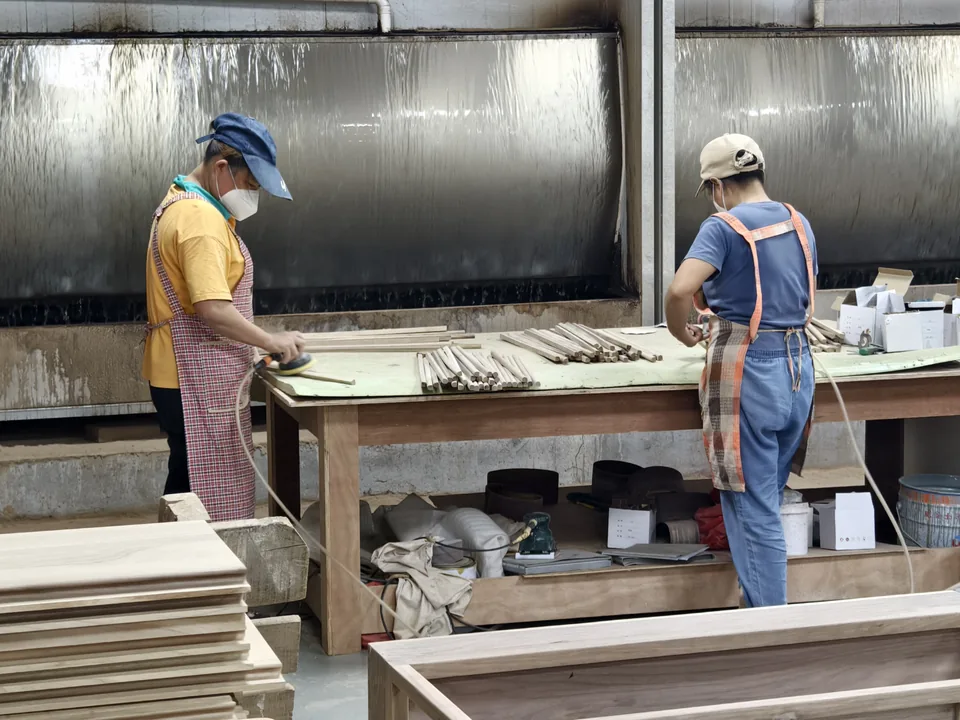
The finish starts before the first coat. Shaping marks, uneven edges and sanding scratches can become more visible once colour and sheen are added. Surface preparation smooths the component, attends to edges and removes dust so the selected finish has a well-prepared base.
The specified finish system guides colouring, base coats, intermediate sanding and top coats, together with the drying and curing required between operations. Attention to each layer helps create a coherent appearance across broad panels, edges and adjoining parts, while preserving the intended character of the wood.
A physical finish panel is more useful than a screen image for agreeing colour, grain visibility and sheen. Review matching pieces together and inspect the surface in angled light for uneven coverage, visible sanding marks or runs. Natural timber variation remains part of the material.
Component cutting
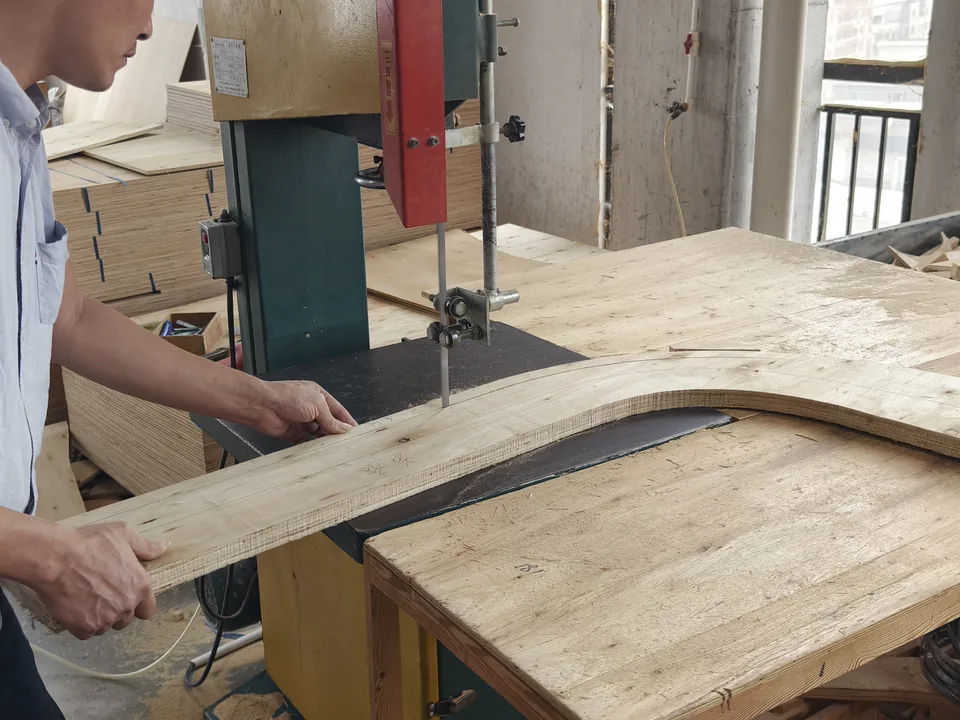
Cutting turns a drawing into the parts that establish the furniture’s proportions. Panel outlines, curved profiles, grain direction and the reference face need to work together. A useful cutting plan considers the visible surface as well as the material needed for shaping, joints and edge finishing.
Straight panels and curved components call for different cutting methods. The workshop photograph shows a curved component being cut on a band saw. Subsequent shaping and sanding refine the profile and prepare the edge for the next stage of making.
For a veneered product, the specification distinguishes the substrate from its decorative wood surface. Component identification and consistent reference points help keep matched or mirrored parts together through assembly. Product dimensions are recorded in mm, with measurement points and tolerances agreed for the model.
Wood-frame assembly
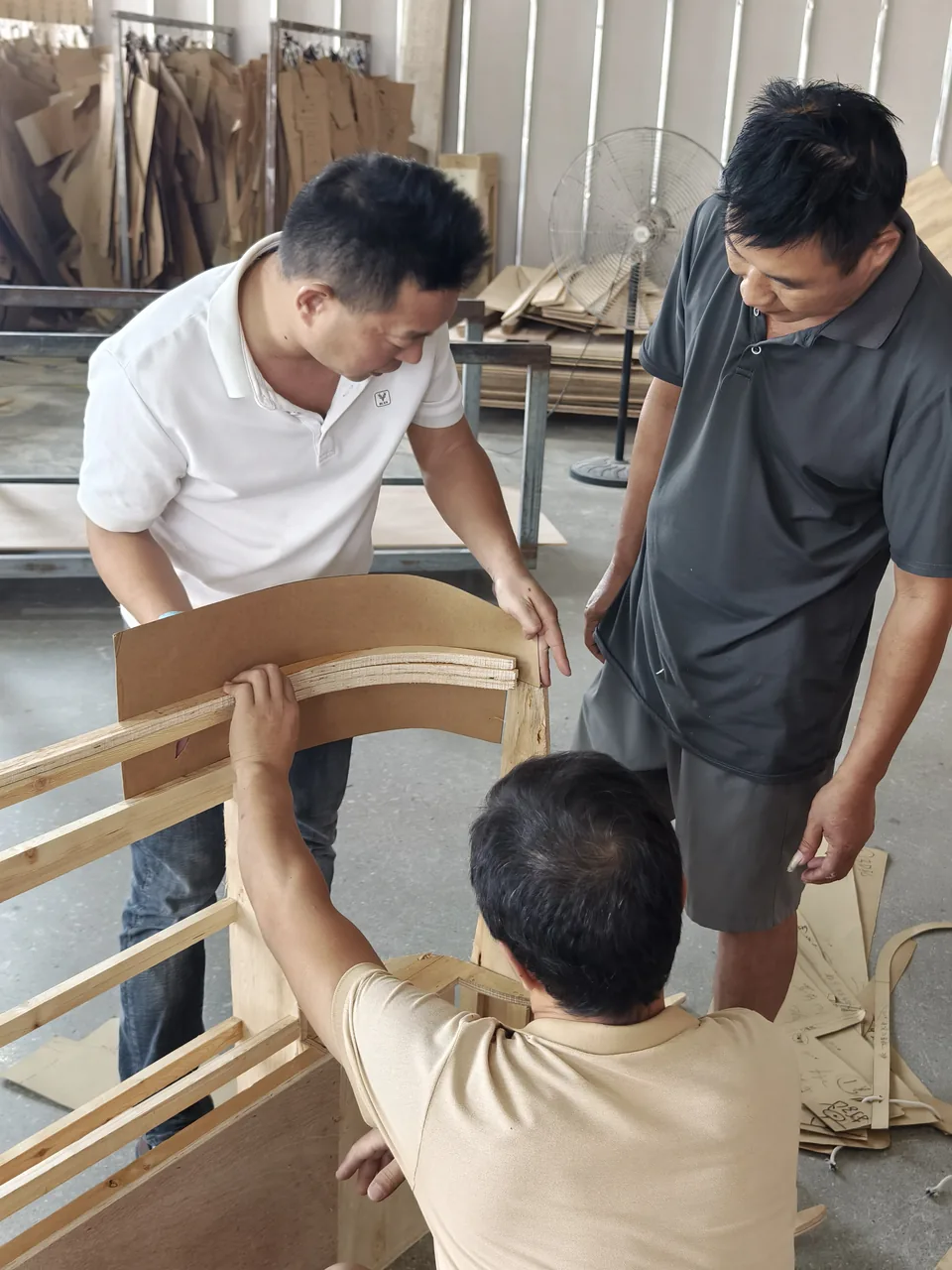
An upholstered sofa or bed takes its shape from the frame inside. Component positioning establishes the width, depth, arm profile and connection points that the finished cover must follow. A misaligned frame is difficult to correct with foam or fabric later.
During assembly, the focus is on bringing the components back to their drawing references: alignment, squareness where required, joint fit and the seating or fixing positions. Curved and modular designs also need attention to how adjoining sections meet. Connection and reinforcement details depend on the construction, rather than one universal fastening method.
Before padding conceals the frame, its edges and contact areas should be suitable for the layers above them. This is also the useful stage to review leg positions, removable connections and any access needed for destination assembly.
Seat support & padding
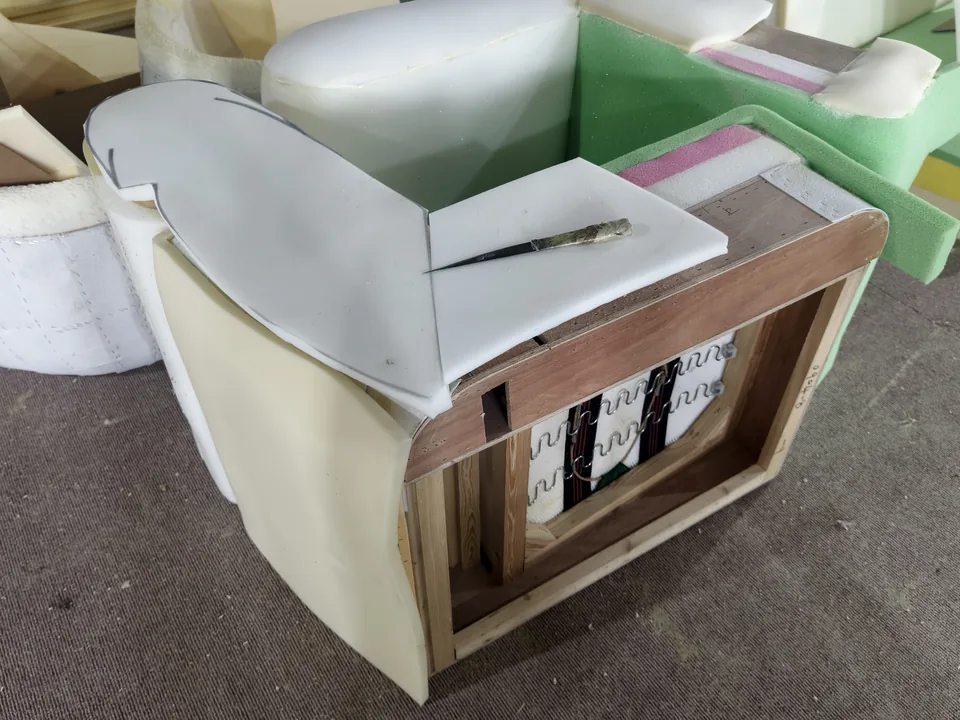
Comfort begins below the upholstery. The frame, seat support, foam and softer wrapping layers work together to distribute the load and define the finished shape. Springs or webbing, where specified, need a layout suited to the model rather than simply a higher count.
Padding follows the frame around the seat, arms and edges. Well-fitted layers help the cover sit smoothly and reduce abrupt transitions between hard structure and the touchable surface. At curves and corners, placement matters as much as the thickness of a single layer.
YMH’s default foam density for sofa seats and other cushioned seating positions is 45D (45 kg/m³). Density describes mass per unit volume; it is not a complete measure of firmness, rebound or sitting feel. Back cushions, decorative pillows and additional filling are separate specifications. Evaluate the whole seat build with the selected sample.
Cover cutting & sewing
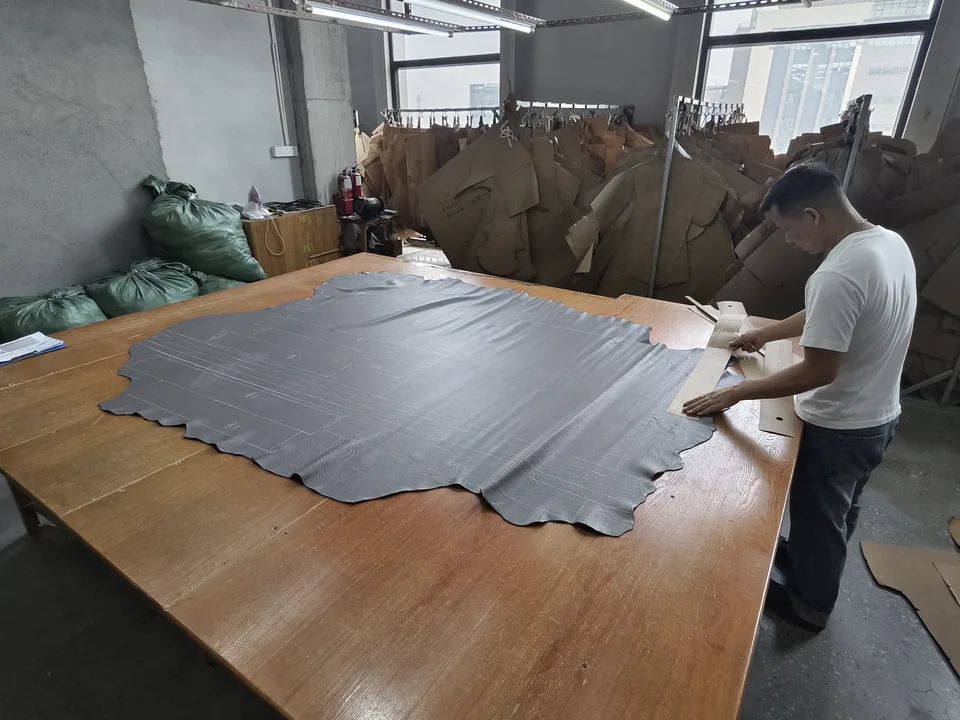
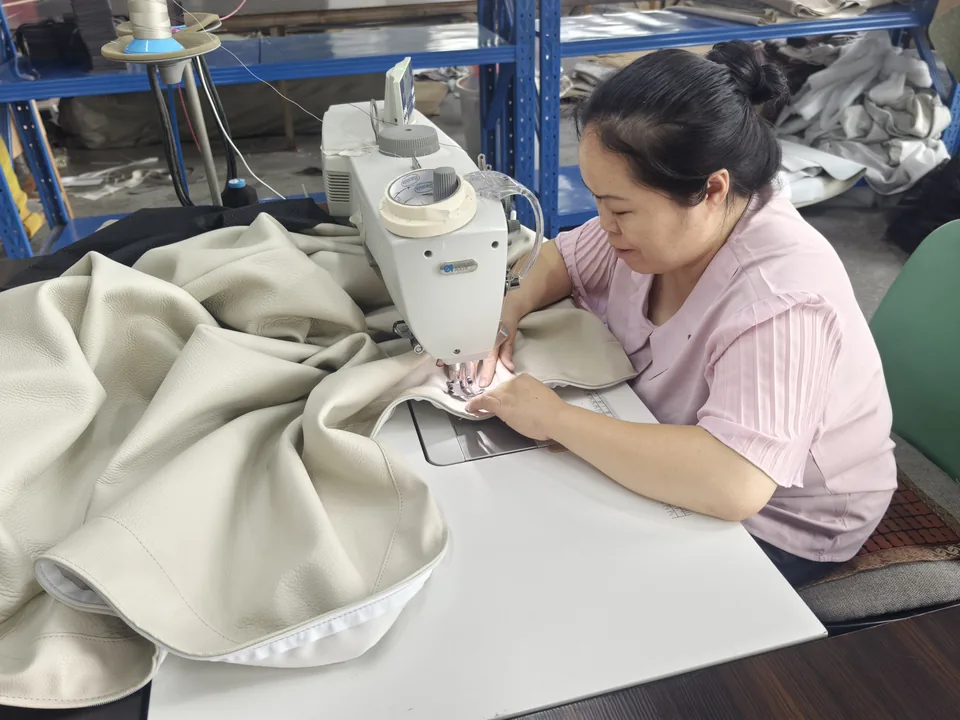
A finished cover is a set of shaped panels, not a flat sheet pulled over a frame. Patterns locate the seams, curves and joining points. For leather, panel placement considers the usable area, surface variation and visible positions; patterned or directional fabrics need a consistent layout.
Cutting allowances must suit the way the panels will be joined and fitted. Sewing brings those shapes together, with attention to seam alignment, curves, piping and the transition between panels. Stitch colour can make a seam quiet or deliberately visible, so it belongs in the appearance approval.
The two workshop photographs show template layout and machine sewing. For your order, define the cover reference and coverage first, then review the visible seam details against the chosen model. Symmetrical features and repeated modules should read as a coordinated set.
Upholstery fitting
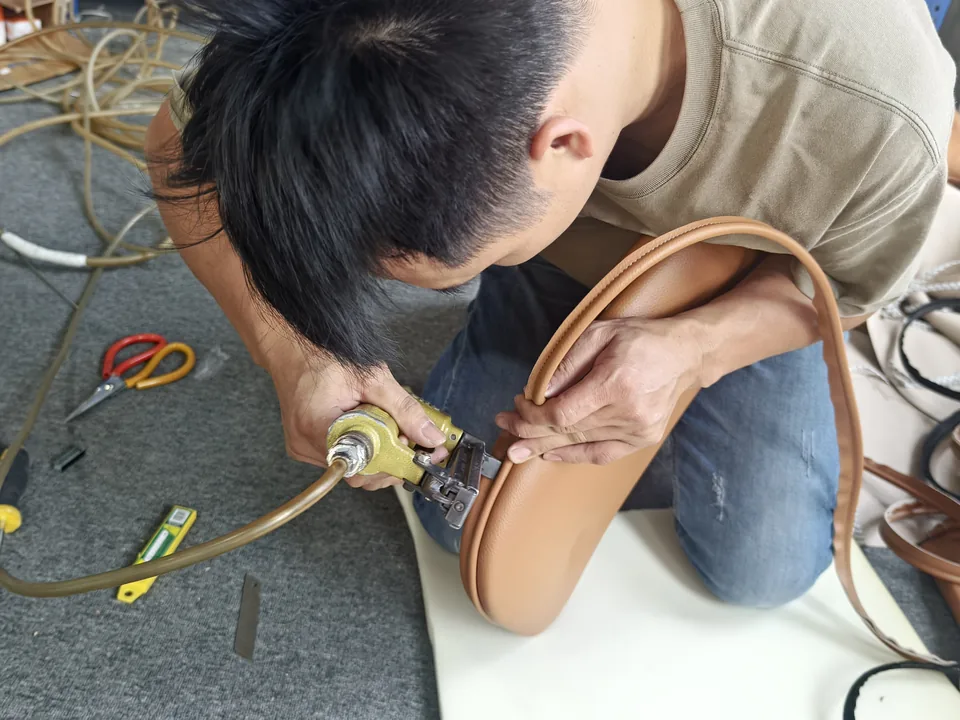
Upholstery fitting brings the sewn cover, padding and frame together. Curved arms, rounded backs and deep corners need controlled tension so the surface follows the intended volume. Too little tension can leave loose areas; too much can pull a seam away from its intended position or distort the padding.
The work balances tension across adjoining areas, positions seams and secures the cover at the concealed fixing points. Corners and curves need particular attention because several material directions meet there. The aim is a clean silhouette while retaining the softness that the design calls for.
Review the finished piece from the front, side and back. Look at the consistency of the curves, seam positions and transitions around legs or fittings. Distinguish an intentional relaxed-cover effect from an unintended fold; the approved model is the reference.
Trial assembly & inspection
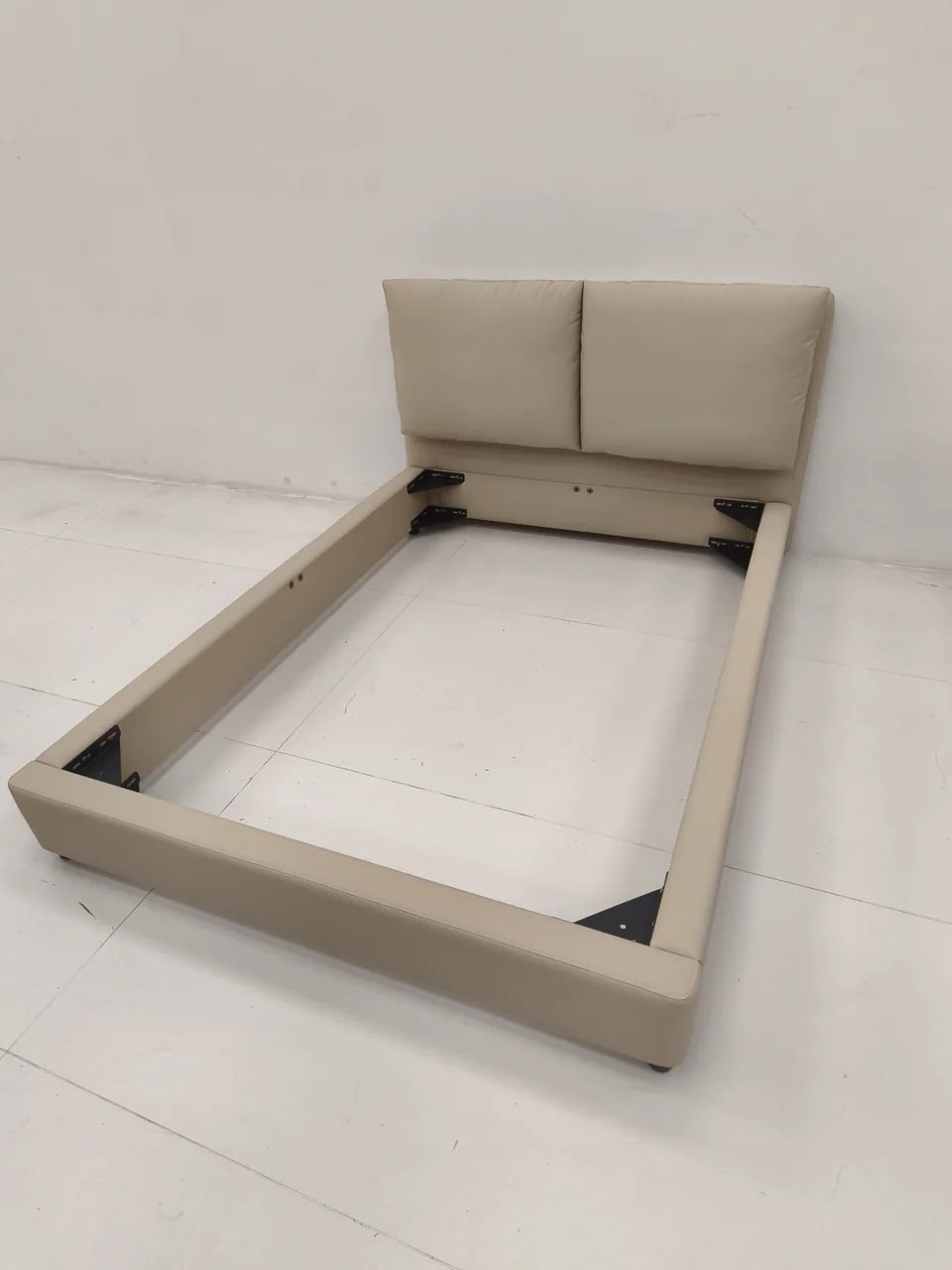
Separate components can look correct and still need adjustment when brought together. Trial assembly reveals how a bed rail meets its headboard, how a leg seats against its fitting, or how neighbouring modules align. It is especially relevant when furniture will be disassembled for shipping.
The inspection scope should connect the approved specification to the finished product: overall dimensions in mm, connection fit, stability, visible wood finish, upholstery and required hardware. Functional items such as doors, drawers or adjustment mechanisms are included where the model has them. Cosmetic review and structural or compliance testing are different activities.
For remote purchasing, agree the inspection points and any photographs or records required before shipment. Keep the product reference, order and approved sample identifiable so a comment about finish or fit can be resolved against the same baseline.
Packing
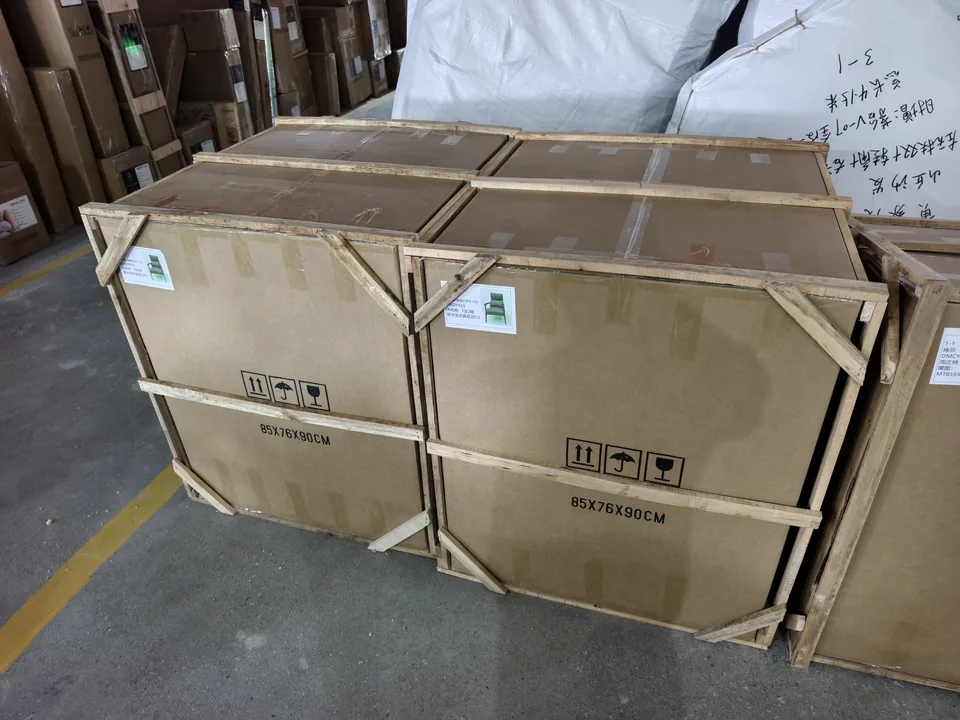
Packing needs to protect the parts most exposed to handling: finished faces, edges, corners, legs and projecting fittings. Contact between components also matters; pieces that are safe in the showroom can rub against each other in transit if they are not separated and restrained.
Plan the inner protection, carton and any external reinforcement around the furniture and the route. The photograph shows cartons with timber reinforcement as a packing example. Reinforcement, moisture protection and pallet or crate requirements are selected for the order, rather than presented as an identical solution for every shipment.
For disassembled products, match the hardware pack and assembly information to the relevant carton. Package count, dimensions, weights and shipping marks help the buyer and forwarder plan handling and freight. Compare packing volume alongside protection: a smaller carton is useful only if the product remains properly protected.
04 / Made for your business
Choose the route that fits your role. Our product, development and service pages explain the next steps in more detail.
Discuss Your Requirements Explore B2B ServicesExplore published models and a coordinated assortment for your market.
Browse Furniture ↗Review a room schedule or adapt a selected model to the layout.
Explore Custom Development ↗Find wholesale and private-label order information in one place.
View B2B Services ↗For trade & project buyers
Furniture importers · Wholesalers & distributors · Retailers & showrooms · Interior designers · Residential developers & fit-out contractors · Boutique hotel & serviced apartment procurement teams
05 / See it in person
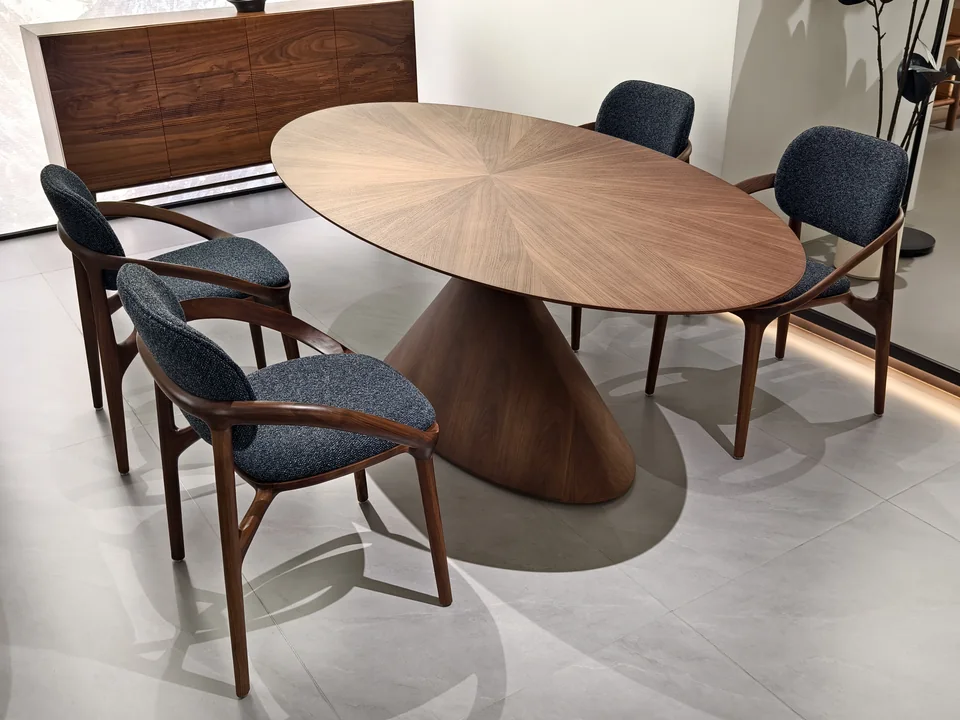
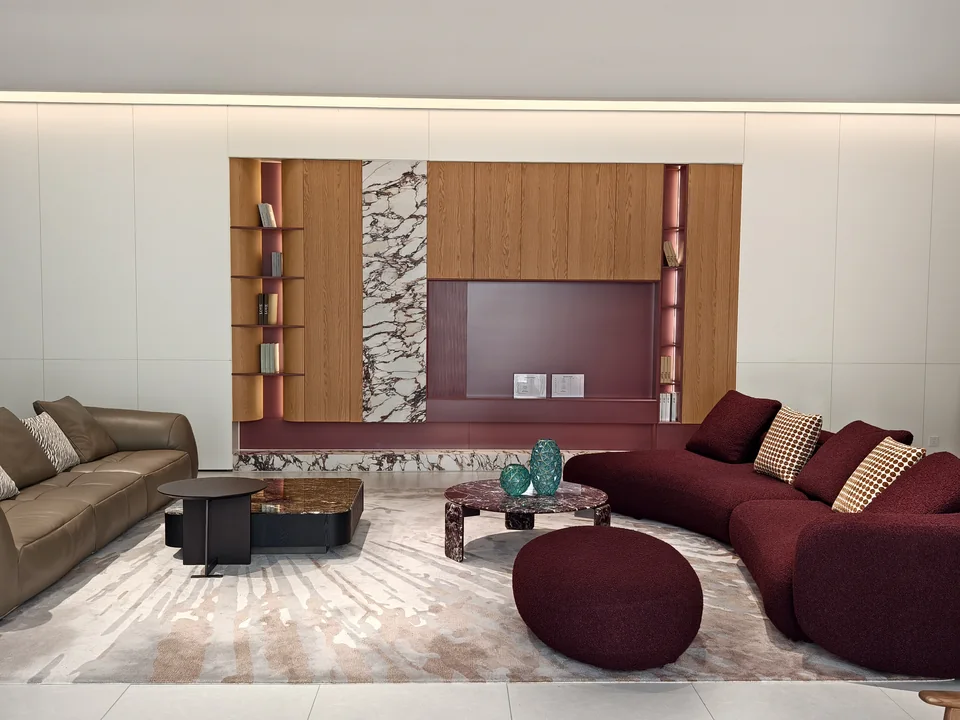
Our showroom brings together walnut and Italian-style light luxury furniture. Plan a visit around the models, materials and room types you want to review.
Compare proportions, seating feel, finishes and coordination in person. Share your model references before visiting so we can prepare the relevant furniture and material samples.
Longjiang, Foshan · Guangdong, China
Let’s bring your next furniture collection to life.
Start a conversation with YMHYMH / Buying guides